
Chris Romberg’s Story
My grandfather, Max Romberg, was born to Jewish parents in Leipzig, Saxony, in 1866. My grandmother, Margarethe Romberg, was born as Margarethe Pfeifer von Hochwalden to Jewish parents in Vienna, Austria, in 1877. They were married in 1902. My father, Harold Romberg, was born into this Jewish family in Vienna in 1913.
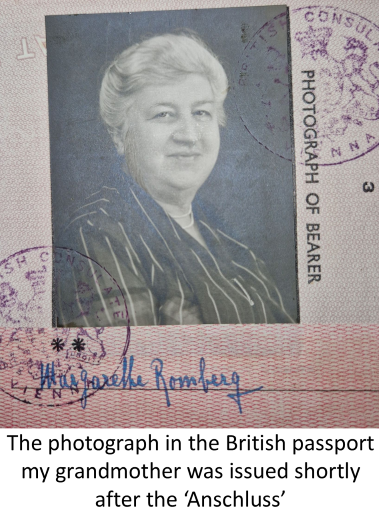
My grandfather had acquired British citizenship by naturalization while temporarily working in Manchester in 1894. As a result, his wife and children could also be British citizens. Other than their passports, they were in all respects German and Austrian: home, culture, language, education, profession. However, the British passports saved their lives.
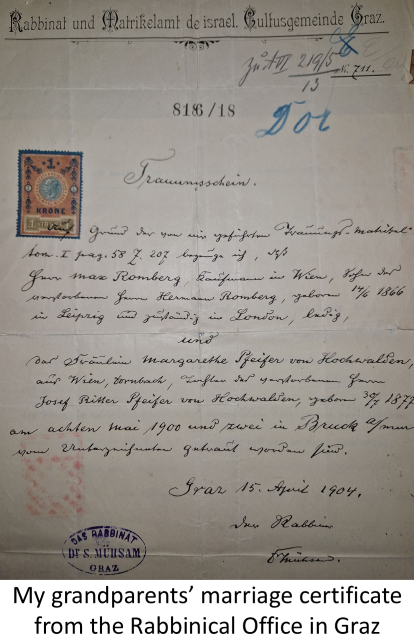
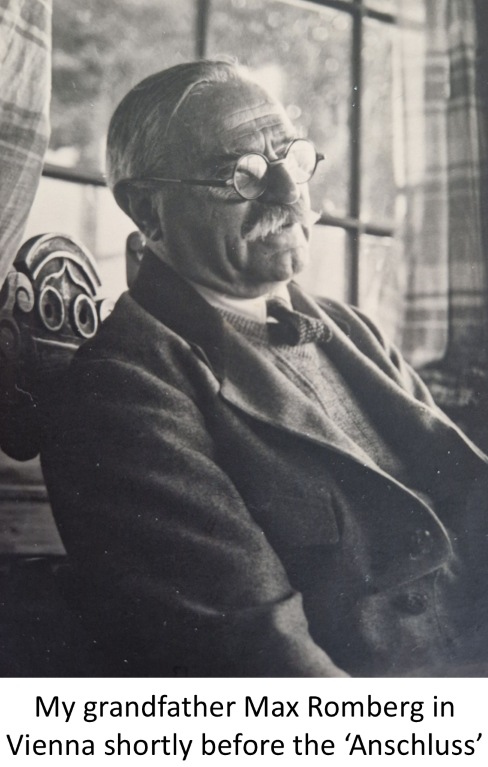
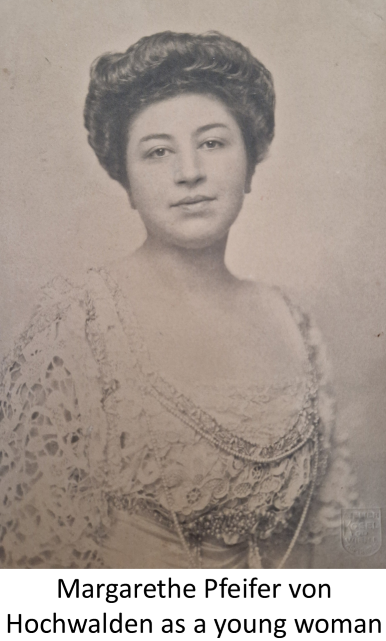
My father was born into this Jewish family in 1913. Two years later during the First World War, the family converted to Christianity like many Austrian Jews. However, for the Nazis, so-called assimilation and religious conversion were irrelevant: for the Nazis, the family was of ‘Jewish blood’.
After the so-called Anschluss in 1938, the integration of Austria into the German Reich, the family realised that they had to leave as the situation for Jews became untenable. Because of their British passports, my father, grandparents and my aunt May were able to flee from Austria and were also able to find refuge in the UK, something that was not a matter of course for those fleeing the Holocaust. They had to leave almost everything behind. With gallows humour, my grandfather said to my grandmother on their arrival in London: “If you married me for my money, now’s the time to think again.”
A second aunt, Edna, fled with her terminally ill fiancé via Hungary to Turkey and then alone to Palestine after the war had started, where she joined the British Army as a psychologist and served in Egypt.
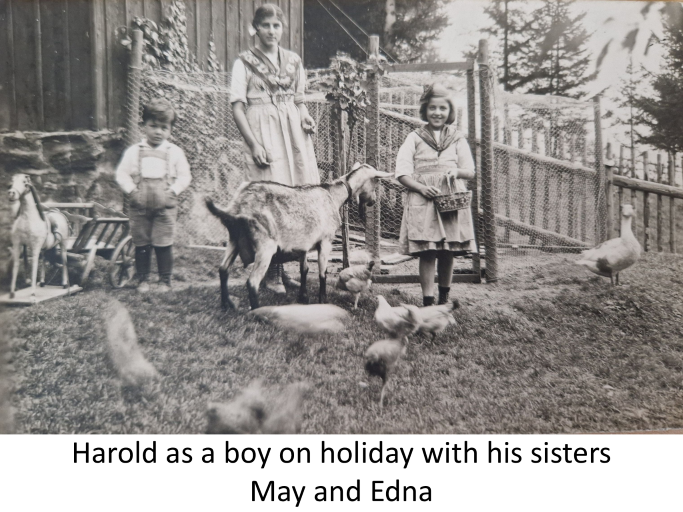
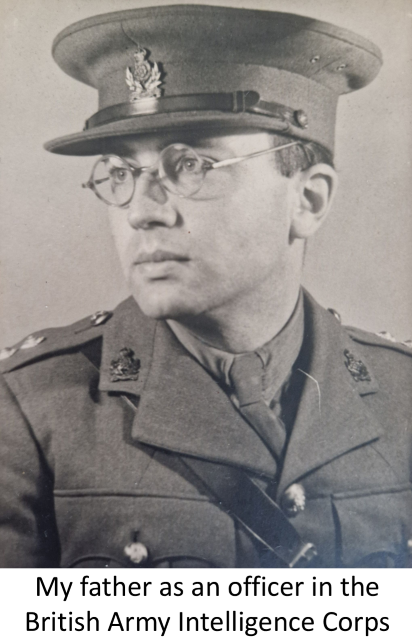
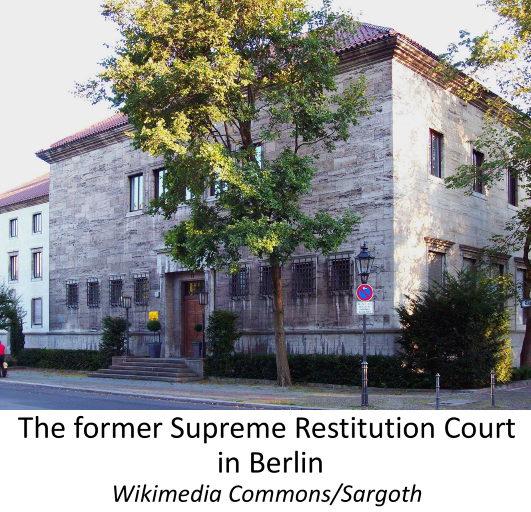
My father had seen that war was inevitable and signed up as a reservist; on the outbreak of the war, he was called up and served in the British Army, mainly as an intelligence officer. He arrived in Germany in 1945; he had been a lawyer in Austria and had qualified as a barrister while serving in the army in London, so he worked on the de-Nazification and reconstruction of the German legal and justice system. He remained in Germany, first with the Army, then the Control Commission for the British Zone, then the British Military Government in Berlin. He participated in the establishment of the Supreme Restitution Court in Berlin, which ruled on the return of property stolen by the Nazis. He was the British judge at the courts in Berlin and in the Federal Republic until the reunification of Germany in 1990. He died in England in 1992.
My father had married my German mother in Hamburg in 1949 and I was born there later that year. I spent most of my working life as a British Army officer. My last appointments were as the Defence Attaché in the British Embassies in Jordan and Egypt, which gave me a detailed insight into the military, security, political and diplomatic situation in the region. I was able to travel widely including in Israel, the West Bank and Gaza. It was clear to me and to diplomatic colleagues that Israel was committing war crimes and was an apartheid state.
My father and his family did not suffer as many other Jewish families had to suffer during the Holocaust; they did not lose their lives or endure the horrors of the camps, and they were fortunate in that they were able to flee. Nevertheless, they lost their home, their possessions, their livelihood, their wider family and friends and had to start again in a different land, a different culture. As their descendant, I am horrified at the losses that the Palestinian people have suffered over the decades and continue to suffer now, as they too have been driven from their homes, mostly in far more brutal ways than my family had to endure and without the availability of a safe refuge.
Never again must mean never again for anyone.
My father’s story also shows that despite the horrors of the Holocaust, restitution, reconciliation, reconstruction and justice were possible. There must be hope that the Palestinian people, who have endured so much loss, hatred, devastation and injustice, will receive restitution, reconciliation, reconstruction and justice in their turn.