Glenn Bassett’s Story
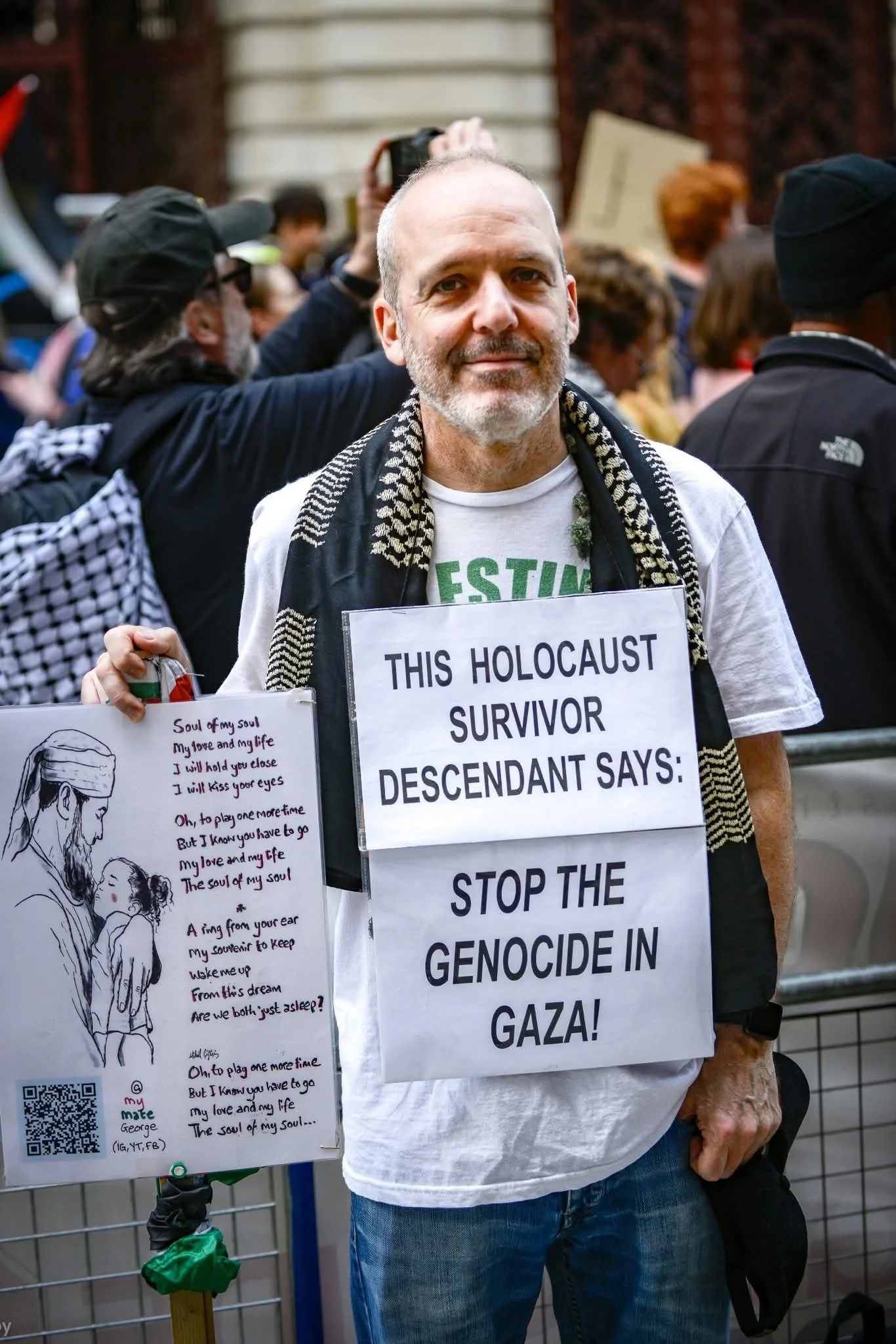
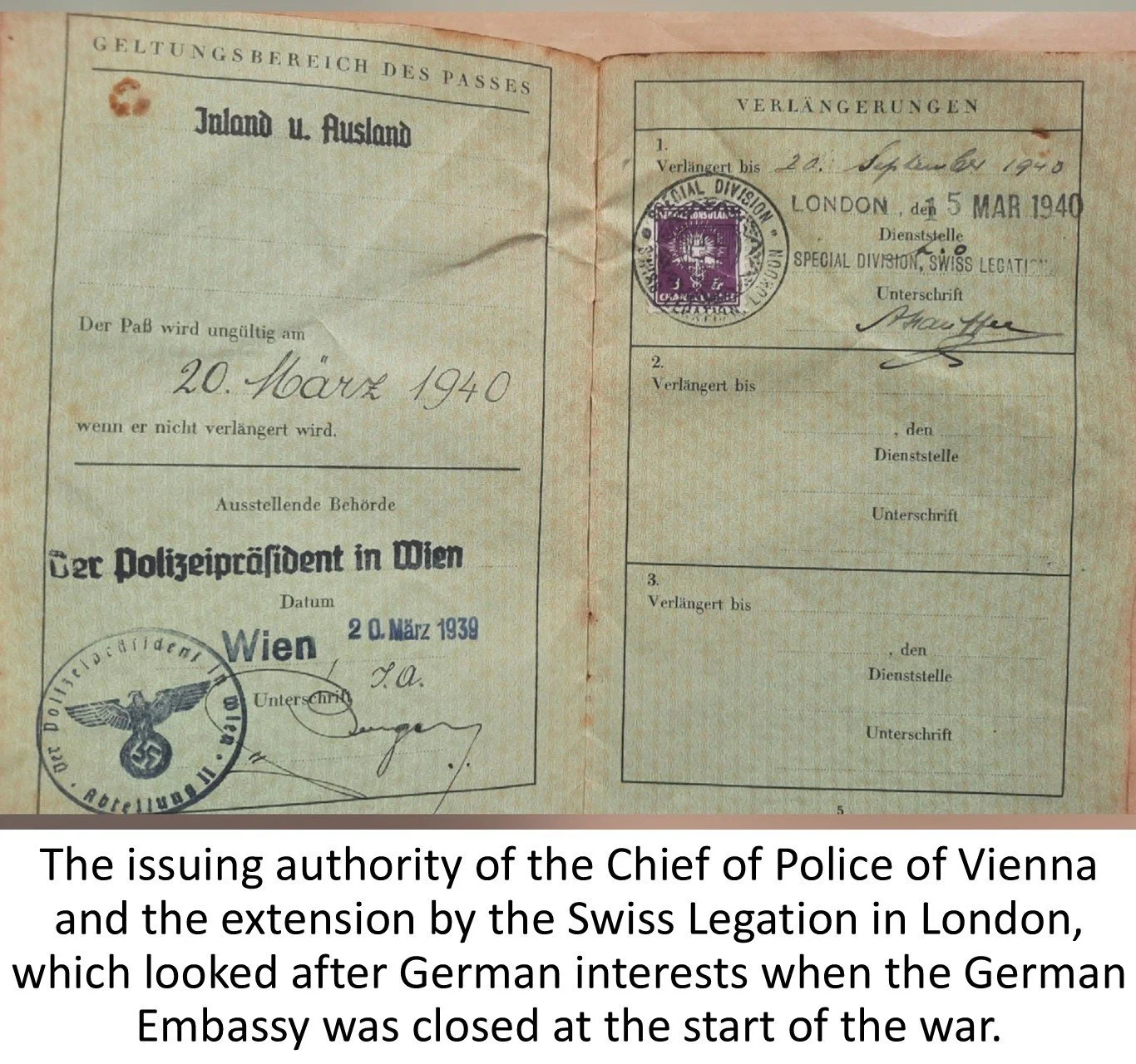
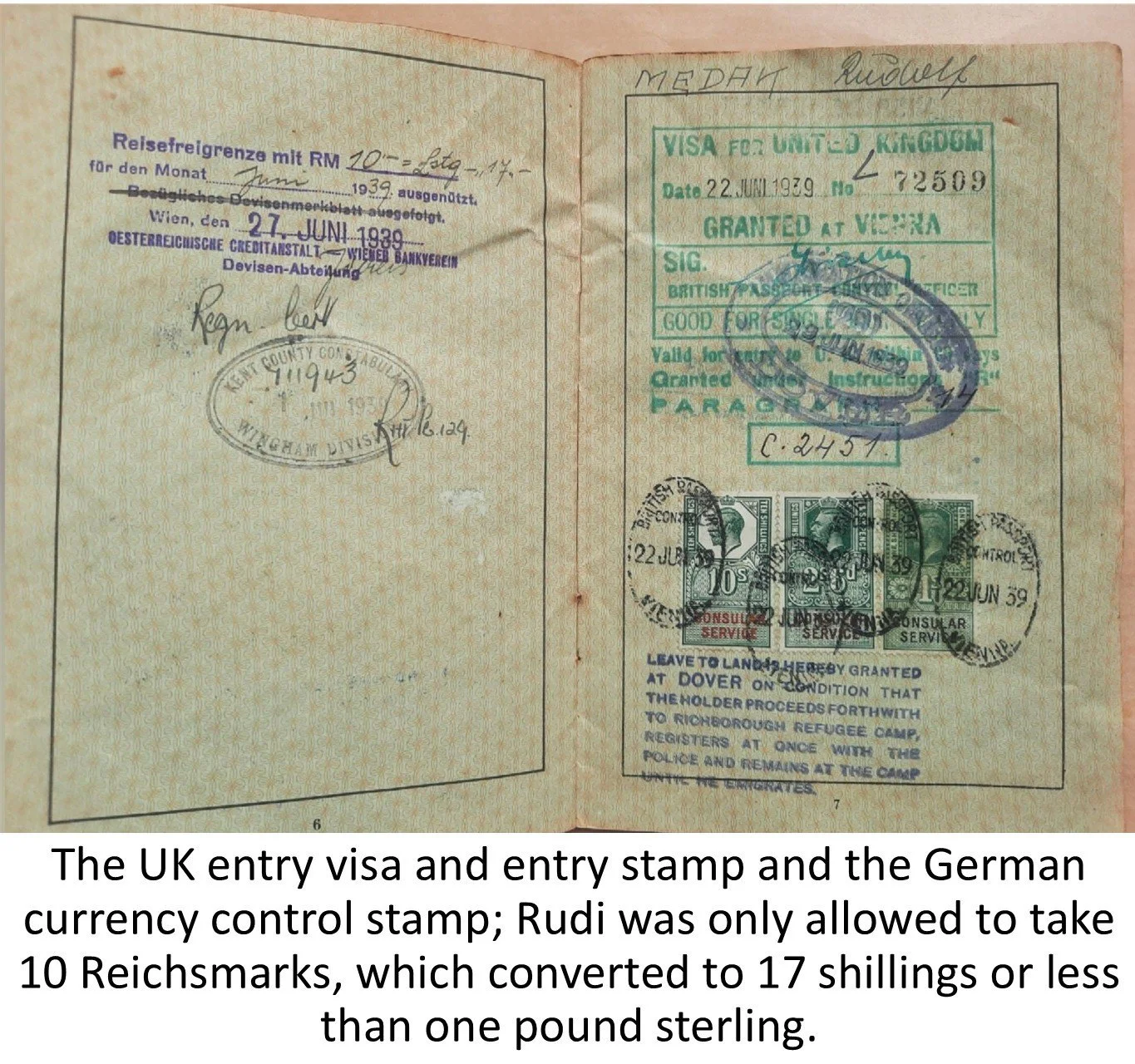
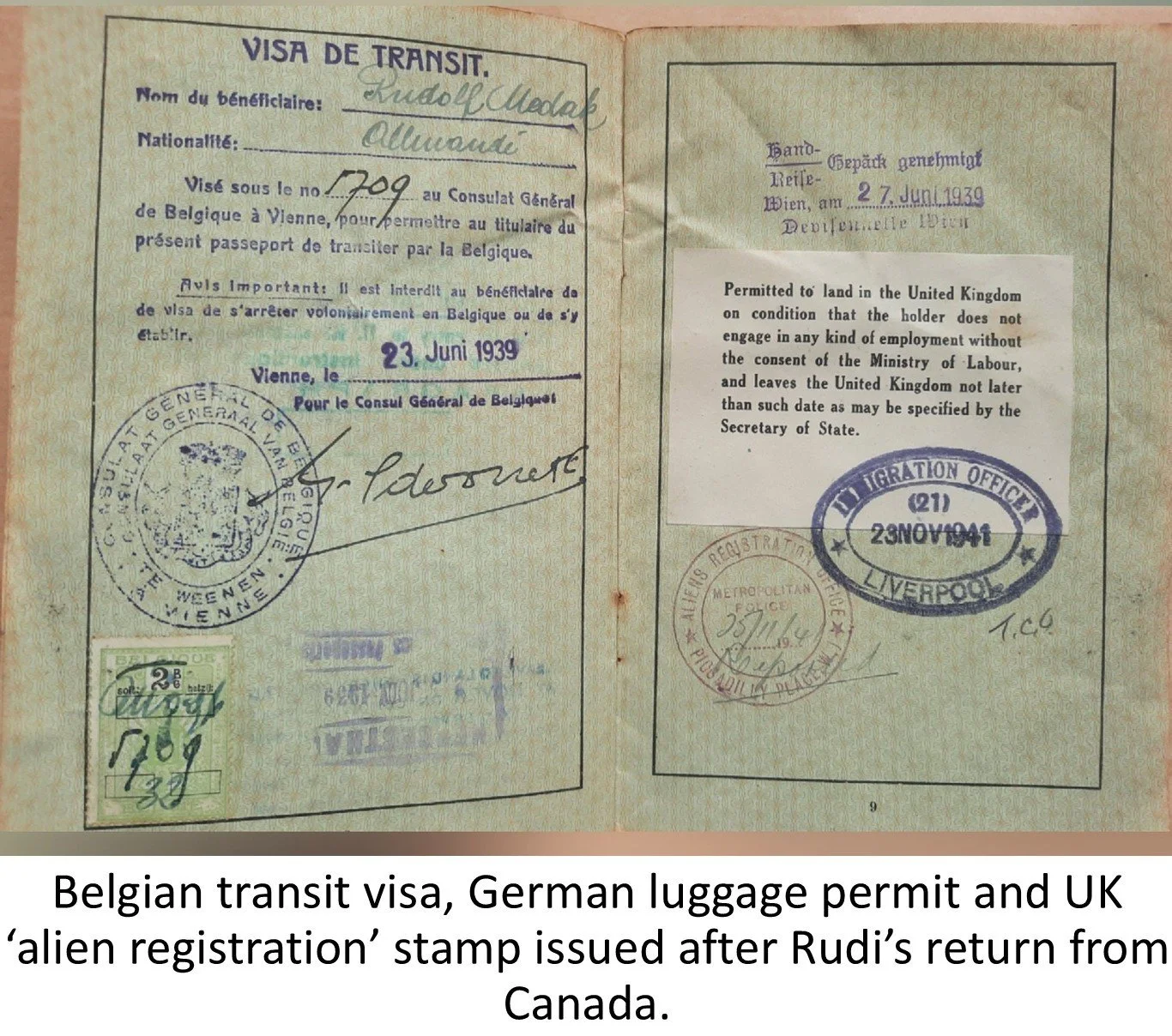
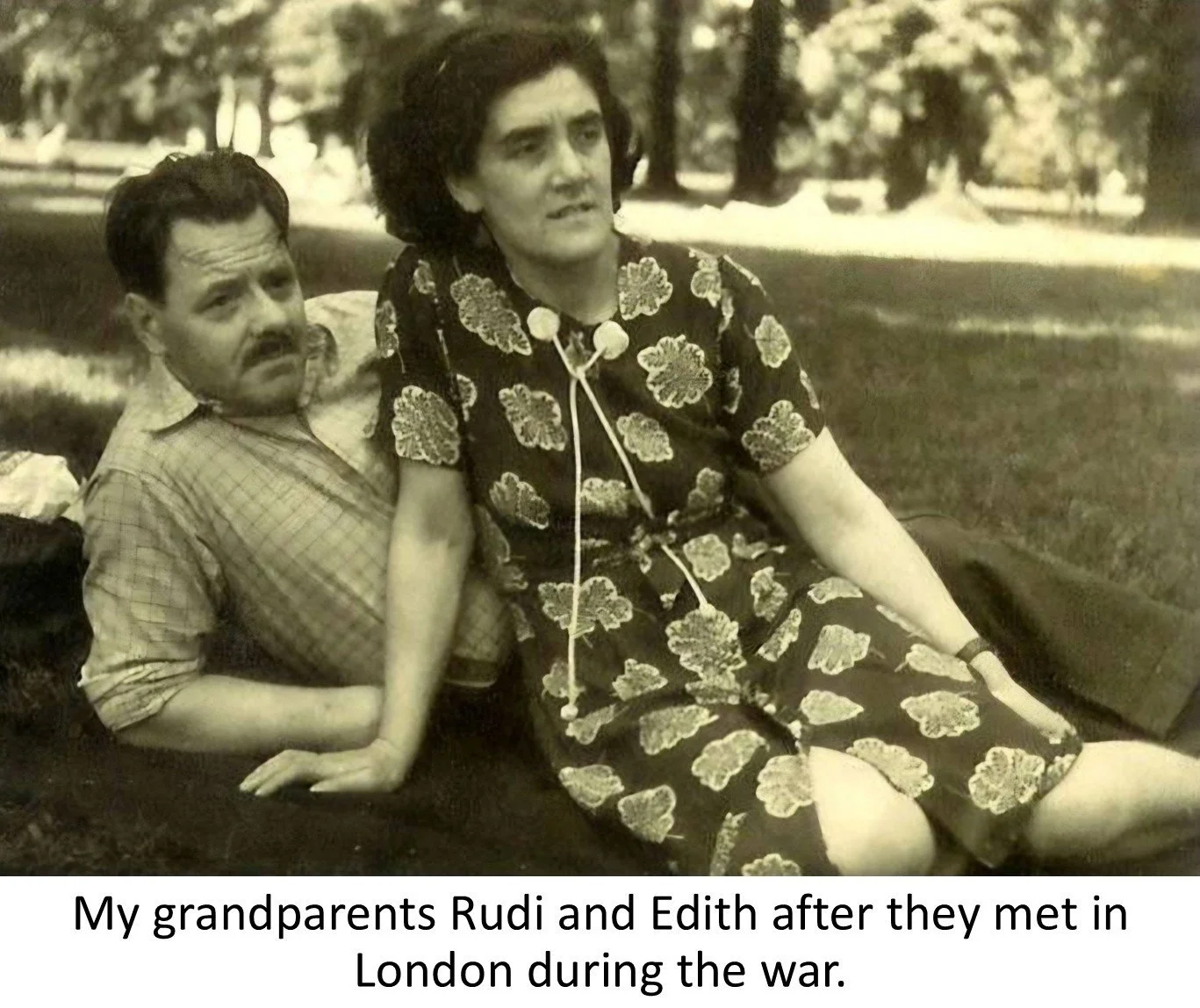
My mother’s parents both separately fled Nazi-occupied Vienna in 1938/9, before they knew each other. Their names were Rudolf (Rudi) Medak and Edith Meisel. There are swastikas stamped in their passports, with a big red ‘J’ marking them as Jews.
Edith’s family were from Prague, but my grandmother moved to live in Vienna to study nursing. She recalled a cousin writing to her in 1934, announcing that he was planning on joining the Nazi party (though he died before this could happen). She had picked up a good level of English, so when the Nazis invaded in 1938 her mother urged her to flee to England, where she was interned on the Isle of Man. Her mother, grandmother, aunts and cousins remained in Prague, hoping they would be safe. Edith and her mother corresponded until 1941, when the letters from her mother abruptly stopped. My own mother’s recollection is that some of those letters were from Prague, but later ones were from a camp. After the war, Edith burned the letters and would not speak about them. I never heard her talk about her family.
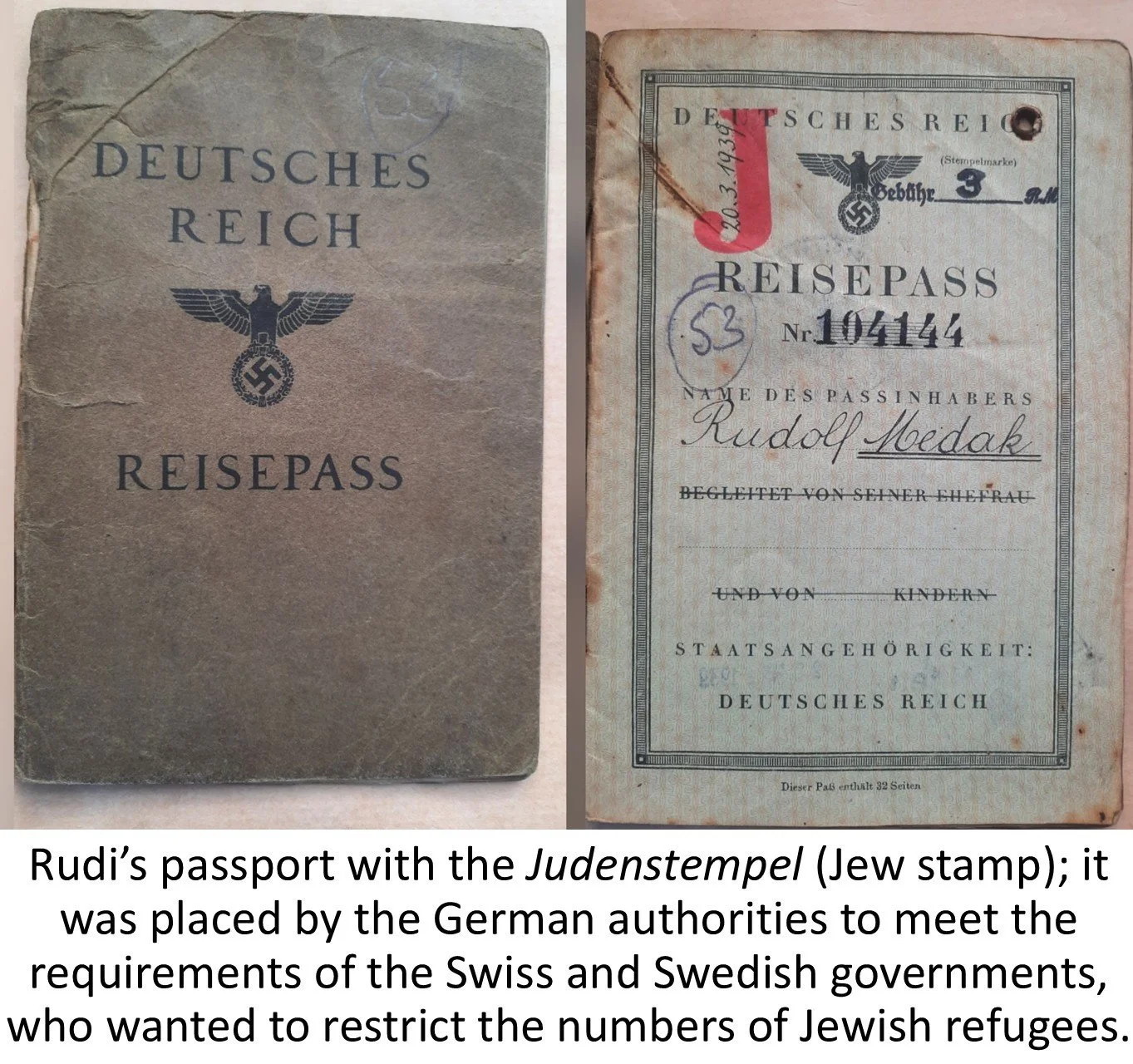
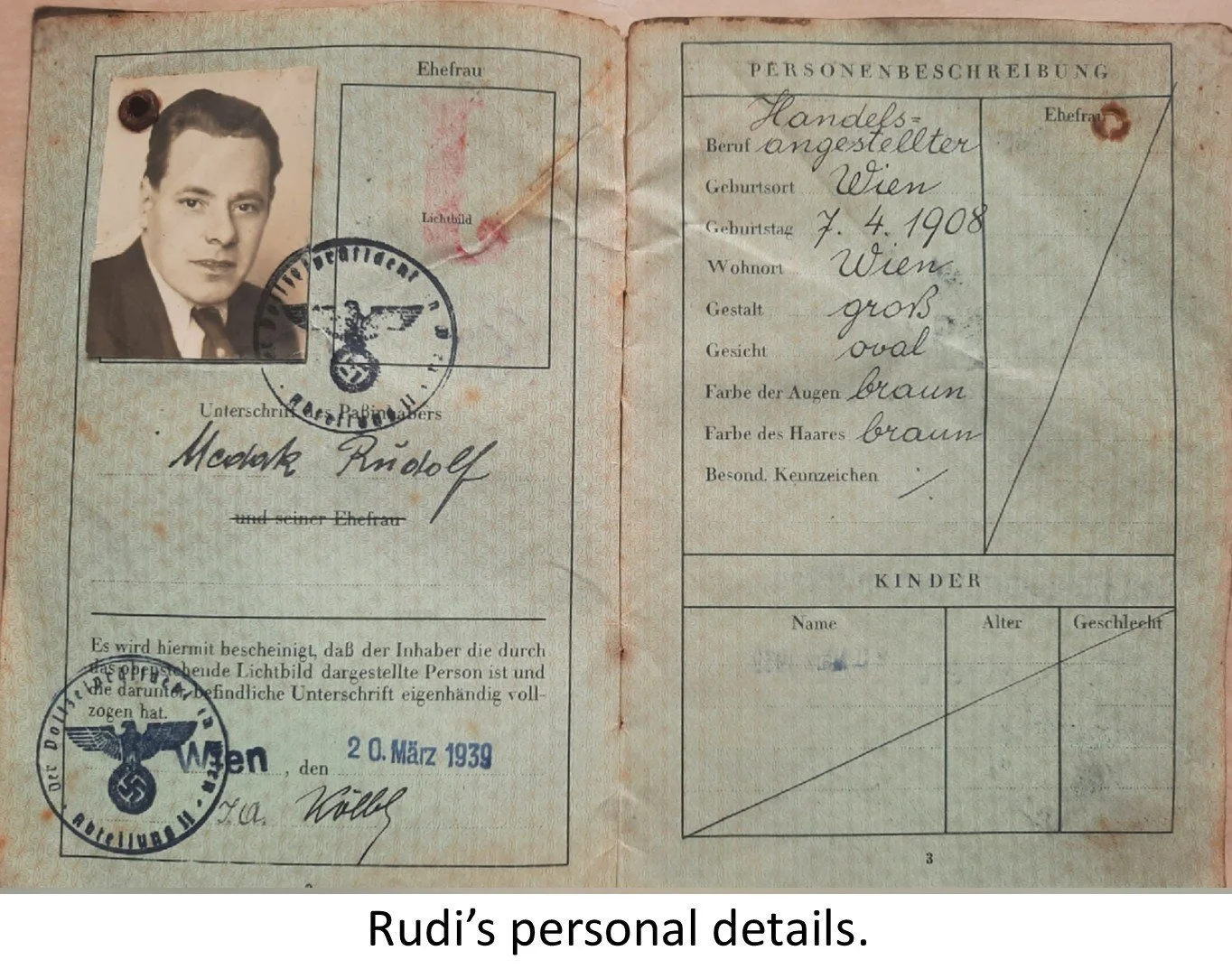
Rudi’s parents had died by the time he was 14, and he became a de-facto parent to his younger brother and sister. As the German repression and violence grew, my grandfather learned that the US military were granting visas to foreigners willing to join their military. He convinced his brother, and his sister’s husband (who was a doctor) to apply, and all three succeeded in fleeing to the States. However, my grandfather himself failed his US military medical, but managed to flee to the UK instead, which he reasoned was at least away from mainland Europe. He was interned for a while in Canada.
Aside from Rudi’s siblings, they never saw any of their family members again.
My most vivid memories of conversations at their North London home involved their intense anger toward the ordinary German people of the 1930s. They rarely spoke about the Nazis themselves – on the basis that, after all, there will always be racist factions in society. Mostly their feelings were directed at two groups of German citizens: the ones who allowed themselves to be taken in so much by hateful and dehumanising racist rhetoric that they actively elected Hitler and, more importantly in my grandparents’ minds, the wider passive population: the ones who chose silence, looked the other way, and refused to raise their voices when they had the chance, even as they saw their nation descending into murderous hatred and fascism.
Though much of my early memory of hearing their experience is from listening in on the conversations they would have with my own parents, I vividly recall Rudi and Edith telling me directly that if any minority is being persecuted like the Jews were in Europe, I must stand up and object, because the silence of ordinary people leads to disaster. And that I should be awake to the lies and deceptions the powerful use to try to legitimise their hatred and crimes. Because Never Again means Never Again for Anyone.
This feeling has informed my life, leading me to study history and politics at school and university and to become for many years an active member of Amnesty International, especially during the UK’s support for the disastrous and illegal war on Iraq. Together with my father’s encouragement to follow the path that inspires me, it has also led me to work with some of society’s most vulnerable people: homeless care leavers, people with enduring mental health problems and learning disabilities, the suicidal and, most recently, people living with dementia, and their carers. So, I owe much of the privilege, freedom and meaning I have found in life to Rudi and Edith, who lost everything they had and started again.
And now I am witness to my government and UK media and businesses playing an active part in whipping up hatred of UK Muslims and in enabling Israel’s daily atrocities and genocide in Palestine. I had hoped and assumed we had learned that these are the worst crimes it is possible for humans to commit, that we should have no part in them and should actively oppose them. Alas, too few of us have taken this lesson.
So, whatever path I had chosen in life, I know that at the big London demonstrations of the last few years I would’ve been standing in the exact same spot where I am always proud to be: under the simple banner which states ‘Holocaust Survivor Descendants Against Gaza Genocide’. That’s where I will continue to be for as long as it takes, in determination, grief and solidarity. And with a personal, palpable sense of history.