Sonja Linden’s Story
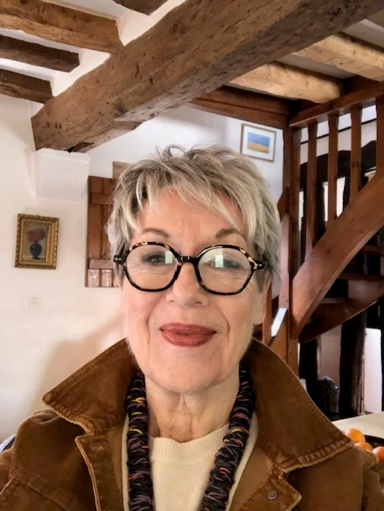
My mother, Liselotte Judas, was born to Ernestine Judas (née Kaufmann) and Abraham Judas in 1920 in Freiburg in Baden, Southwest Germany. She grew up in a middle class Orthodox Jewish family, the eldest of three children, her brother Hans being born in 1922 and her sister Ilse in 1924.
At that time Germany was recovering from the devastating impact of the First World War and the deprivations caused by the Treaty of Versailles. The consequences of this meant that Lilo, as my mother was called, and her brother and sister were growing up under the emerging shadow of the Nazis. 1933 was a crucial turning point year for her family. It was the year that her mother died aged 46 of breast cancer, leaving behind three devastated children under thirteen. It was also the year that Hitler came to power
“When I was 13, I joined a Jewish club, Maccabi and we went on shooting practice in the Black Forest. We were getting prepared. Later I joined a different Jewish club which was not so Palestine orientated but I felt every Jew has a right to defend himself.” [extracts from Lilo’s memoir].
Lilo’s father’s once flourishing horse and cattle trading company rapidly declined after 1933 as a result of Nazi oppression.
“Brownshirts [the colloquial name for the Nazi paramilitary Sturmabteilung (SA)] now marched through the streets. Hitler screamed his abuses over the wireless. He had the final solution for all Jews. Germany was an abyss of hate and death. Where were all the other people of this world?”
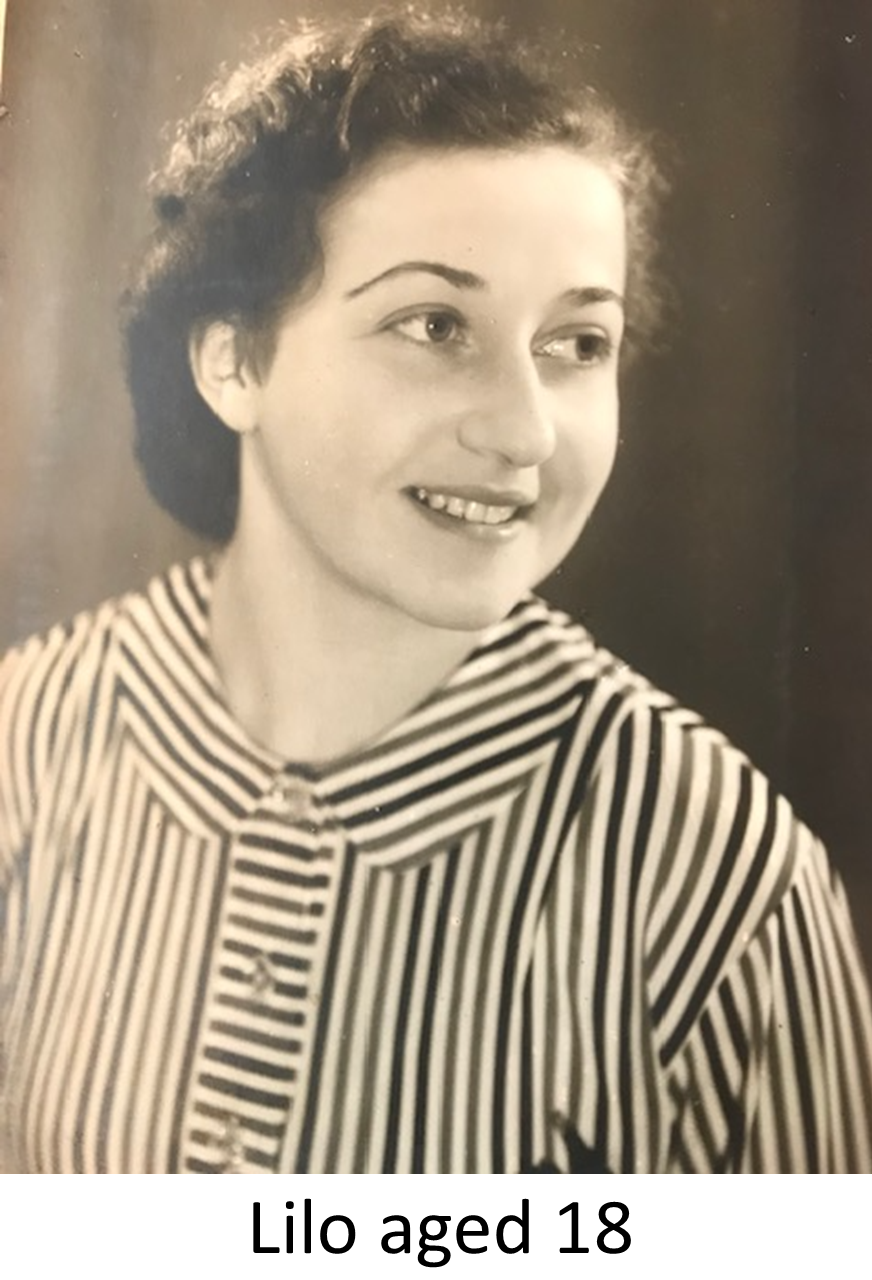
With the withdrawal of my grandfather’s trading licence in 1937, followed by the forced abandonment of the business on August 1, 1938, the family's livelihood was lost
“Jewish shops were burned down. The jackboots marched. Nobody felt safe. Food shops were out of bounds. By the back door some brave friends fed us. Railways were for escaping, instead of waiting for the knock on the door. Some of us were caught and never seen again. I still hear the screams of wives and children when out of the blue their husbands and fathers were first brutally assaulted and then dragged away.”
Flight now seemed to be the only way out of a desperate situation. In January 1938 Lilo’s sister Ilse, aged 14, was sent by ship to the United States, along with other German-Jewish teenagers, as part of a rescue scheme, to be taken in by an American-Jewish family in Milwaukee. Within months she excelled at her local high school and later graduated as a doctor and child psycho-analyst.
After many failed attempts to get an exit visa from Nazi Germany, Lilo’s father managed to escape to Switzerland in November 1938. Soon after, her brother Hans crossed the Swiss border illegally, aged 16, to be put into a series of internment camps, which were, in fact, no less than forced labour camps.
Lilo was the last remaining member of her immediate family to leave Germany, having been refused entry to the USA and Switzerland. She managed to get to England just before war broke out, arriving in England in July 1939, aged 18, on a domestic service visa under the guarantorship of a Jewish family. This scheme permitted entry to the UK for young Jewish women to work as domestic servants. Thus she evaded the fate of many members of her extended family, who the following year, on the morning of October 22, 1940, were deported, along with the entire Jewish community in Baden, to Gurs, in the French foothills of the Pyrenees, an internment camp with appalling conditions.
In 1941Lilo met my father Hermann Heinrich Wilberg, a political refugee, at the Freie Deutsche Kulturbund - Free German League of Culture – located in Belsize Park, London, where she had joined the choir, of which my musician father was the choirmaster.
“Three quarters of its members were political refugees and one quarter Jewish. It was full of socialists and communists, very political and intellectual. Before, in Germany, I had only found intellectual Jews in the ‘underground’ like when we went shooting when there were discussions on German art and culture. That is the great irony that people with such a high culture should demean themselves by annihilating human beings.”
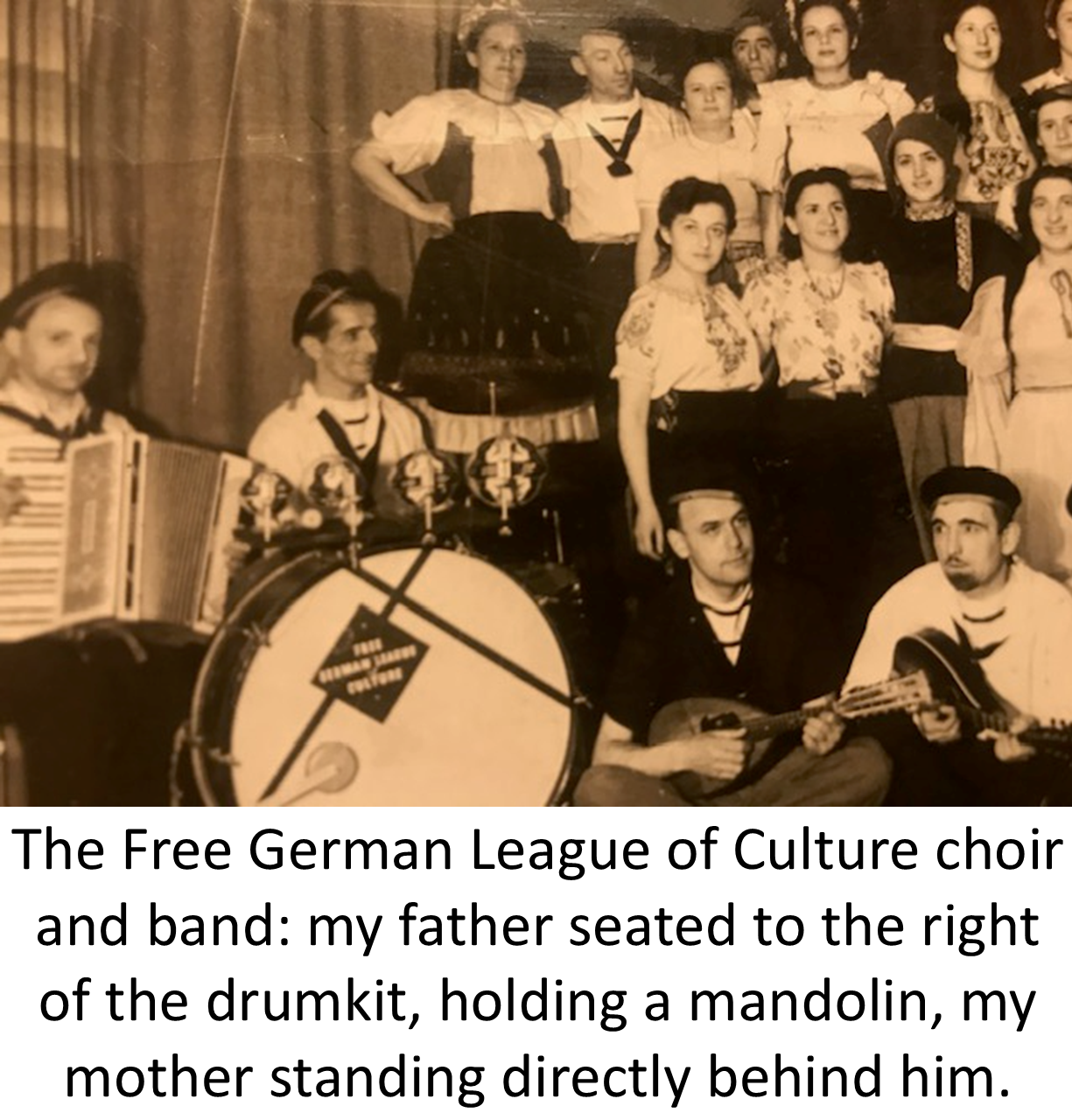
As a member of the Sozialistische Arbeiterpartei Deutschlands (Socialist Workers’ Party of Germany), my father had been in the resistance movement against Hitler since before his accession to power, and was arrested and interrogated by the Gestapo and imprisoned in 1936 for six months as a political opponent. Discovering he was due to be re-arrested, he fled to Czechoslovakia till it was invaded in 1939, after which he managed to make his way to the UK.
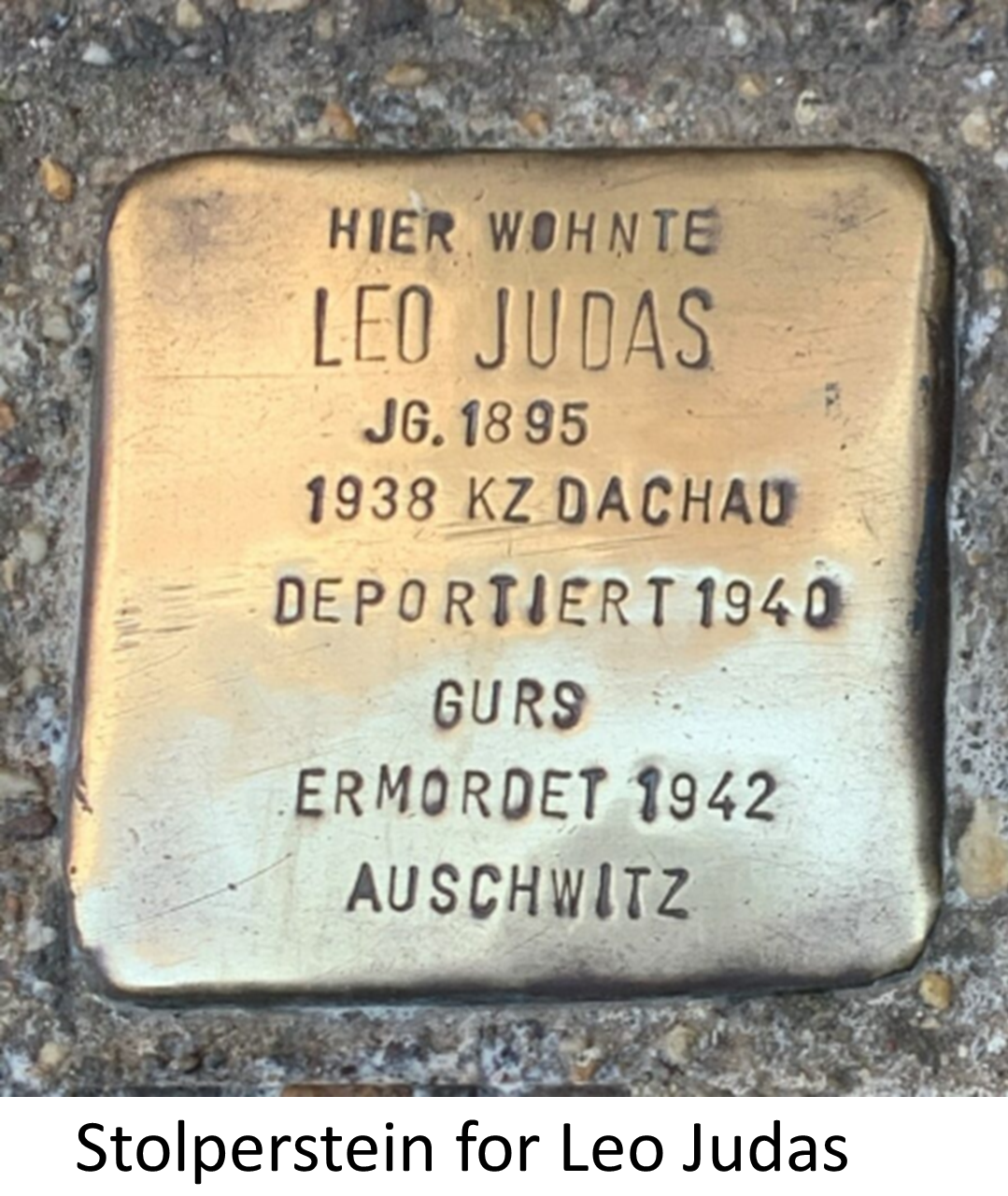
I was born in London in July 1945. The war in Europe had ended two months earlier at which point Lilo’s brother returned to Freiburg determined not to let Hitler win in his attempt to purge the country of its Jewish population. Through Hans, Lilo was to learn that 17 members of her family had been murdered by the Nazi regime, deported from French concentration camps to Auschwitz and Sachsenhausen. Stolpersteine (stumbling stones) set as memorials into the pavement now mark all the locations in Freiburg where Judas family members once lived.
It is because of my mother’s lived experience and my father’s political activism that I cannot remain a bystander and call upon all people of integrity and humanity to decry the ‘othering’ and oppression of an entire population that has culminated in mass murder. It is deeply shocking to me that Jews who have experienced a genocide are now committing one, and with impunity. The oppressed have morphed into the oppressor.
The stages towards this Palestinian genocide bear the hallmark of the stages towards the Jewish genocide my mother’s family were victims of, from dehumanisation to mass killing and ‘deliberately inflicting conditions of life’ on a national group ‘calculated to bring about its physical destruction in whole or in part.” [The Convention on the Prevention and Punishment of the Crime of Genocide]
"The arc of the moral universe is long, but it bends toward justice” is a quote from Martin Luther King Jr. The burning question is - when? Time is running out for the Palestinian people. The peoples of the world must continue to make their voices heard.